
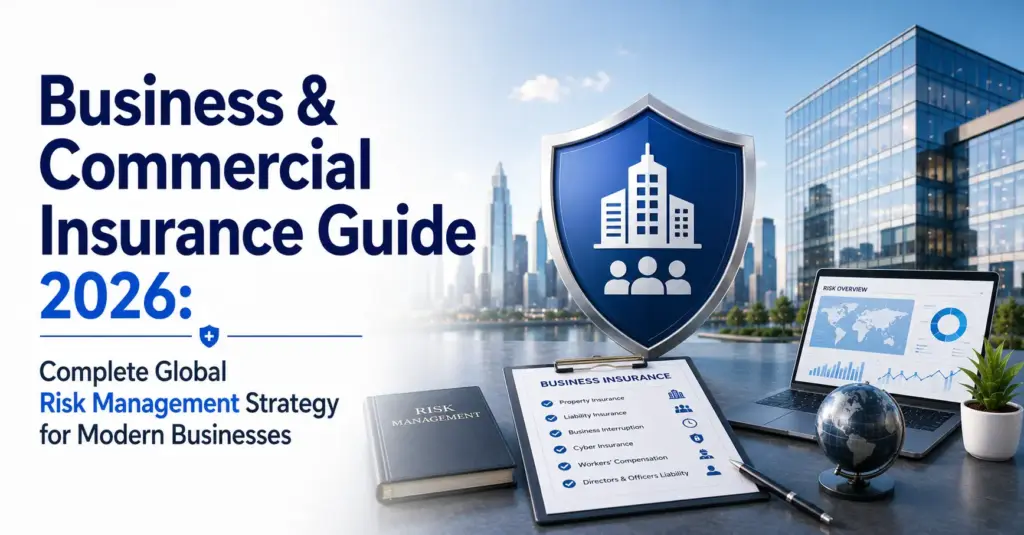
Why Business & Commercial Insurance Is More Important Than Ever in 2026
In today’s rapidly evolving business environment, companies face increasing financial, legal, operational, and cybersecurity risks. Whether you operate a startup, small business, e-commerce store, SaaS company, manufacturing facility, or multinational corporation, the right Business & Commercial Insurance strategy can protect your assets, revenue, reputation, and long-term profitability.
As cybercrime, regulatory compliance requirements, employee liability claims, and climate-related disruptions continue to rise, commercial insurance has become a critical component of enterprise risk management and business continuity planning.
A single lawsuit, ransomware attack, workplace accident, or natural disaster can create millions of dollars in losses. Business insurance provides a financial safety net that helps organizations recover quickly and maintain operational stability.
What Is Business & Commercial Insurance?
Business insurance refers to a collection of specialized insurance policies designed to protect organizations against financial losses resulting from lawsuits, property damage, cyber incidents, employee claims, business interruption, professional negligence, and other commercial risks.
Unlike personal insurance policies, commercial insurance is customized according to:
- Industry sector
- Business size
- Annual revenue
- Asset value
- Workforce size
- Regulatory requirements
- Risk exposure
A comprehensive commercial insurance portfolio helps businesses safeguard cash flow, preserve shareholder value, and maintain long-term growth.
Major Business Risks Companies Face in 2026
Organizations today operate in an increasingly complex risk environment.
Key Business Risks Include:
- Cybersecurity breaches and ransomware attacks
- Data privacy violations
- Employee lawsuits and workplace injuries
- Professional negligence claims
- Property damage and equipment failure
- Supply chain disruptions
- Natural disasters and climate-related events
- Product recalls and liability claims
- Contract disputes and litigation
- Regulatory compliance penalties
Without adequate commercial insurance coverage, these risks can threaten a company’s financial survival.
Essential Types of Business Insurance Every Company Should Consider
1. General Liability Insurance
General Liability Insurance is the foundation of commercial risk protection.
It covers:
- Third-party bodily injury
- Property damage claims
- Legal defense costs
- Settlement expenses
- Advertising injury claims
This policy is often required when signing contracts with clients, landlords, vendors, and government agencies.
High-CPC Keywords:
- General Liability Insurance Quote
- Small Business Liability Insurance
- Commercial Insurance Coverage
- Business Risk Protection
2. Commercial Property Insurance
Commercial Property Insurance protects physical assets owned by the business.
Covered assets may include:
- Office buildings
- Warehouses
- Manufacturing facilities
- Inventory
- Machinery
- Technology infrastructure
- Furniture and equipment
Protection typically includes:
- Fire damage
- Theft
- Vandalism
- Storm damage
- Water damage
- Equipment breakdown
3. Professional Liability Insurance (Errors & Omissions)
Professional Liability Insurance, also known as Errors & Omissions (E&O) Insurance, protects service-based businesses from claims involving:
- Professional mistakes
- Negligence
- Misrepresentation
- Missed deadlines
- Financial losses suffered by clients
This coverage is particularly important for:
- Consultants
- Financial advisors
- Accountants
- IT companies
- Marketing agencies
- Legal professionals
High-ECPM Keywords:
- Professional Liability Coverage
- Errors and Omissions Insurance
- Financial Advisor Insurance
- Consultant Insurance Policy
4. Cyber Liability Insurance
Cyber insurance has become one of the fastest-growing commercial insurance sectors worldwide.
Modern businesses face significant exposure from:
- Data breaches
- Phishing attacks
- Ransomware incidents
- Cloud security failures
- Identity theft
- Regulatory fines
Cyber Liability Insurance may cover:
- Incident response costs
- Legal defense expenses
- Customer notification costs
- Data recovery
- Business interruption losses
- Cyber extortion payments
High-CPC Keywords:
- Cyber Liability Insurance
- Data Breach Insurance
- Ransomware Protection Coverage
- Cybersecurity Risk Management
5. Workers’ Compensation Insurance
Workers’ Compensation Insurance provides benefits to employees injured while performing work-related duties.
Coverage typically includes:
- Medical treatment
- Rehabilitation costs
- Lost wages
- Disability benefits
- Legal expenses
Many countries legally require businesses to maintain workers’ compensation coverage.
6. Business Interruption Insurance
Unexpected disruptions can severely impact revenue and cash flow.
Business Interruption Insurance helps cover:
- Lost income
- Payroll expenses
- Rent obligations
- Temporary relocation costs
- Operating expenses during shutdowns
This coverage is particularly valuable for businesses exposed to:
- Natural disasters
- Fire damage
- Utility outages
- Supply chain interruptions
7. Directors & Officers (D&O) Insurance
D&O Insurance protects company executives, directors, and board members against personal financial liability arising from business decisions.
Coverage may include:
- Shareholder lawsuits
- Regulatory investigations
- Corporate governance claims
- Fiduciary duty disputes
This policy is essential for:
- Public companies
- Private corporations
- Venture-backed startups
- Nonprofit organizations
High-Value Insurance Keywords:
- Directors and Officers Insurance
- Executive Liability Insurance
- Corporate Governance Protection
- Board Member Insurance
8. Commercial Auto Insurance
Businesses using vehicles for operations require commercial auto coverage.
Protected vehicles include:
- Delivery vans
- Fleet vehicles
- Service trucks
- Company cars
Coverage may include:
- Collision damage
- Liability claims
- Vehicle theft
- Driver injuries
9. Product Liability Insurance
Manufacturers, distributors, retailers, and e-commerce brands face significant risks if products cause injury or property damage.
Product Liability Insurance helps cover:
- Product defect claims
- Consumer injury lawsuits
- Legal defense costs
- Settlement payments
This is especially important for global brands selling products internationally.
How Commercial Insurance Premiums Are Calculated
Insurance providers assess multiple factors when determining commercial insurance costs:
Business Factors
- Annual revenue
- Industry classification
- Number of employees
- Geographic location
- Claims history
- Asset value
- Security measures
Risk Factors
- Cybersecurity infrastructure
- Workplace safety standards
- Regulatory compliance record
- Business continuity planning
Companies with stronger risk management practices often qualify for lower premiums.
Best Commercial Insurance Strategies to Reduce Costs
Businesses can reduce insurance expenses by:
Bundle Multiple Policies
Combining coverage can generate significant discounts.
Improve Workplace Safety
Lower accident rates often result in lower premiums.
Strengthen Cybersecurity
Investing in:
- Endpoint protection
- Multi-factor authentication
- Employee cybersecurity training
- Cloud security monitoring
can reduce cyber insurance costs.
Increase Deductibles
Higher deductibles generally lower annual premiums.
Conduct Annual Risk Assessments
Regular risk evaluations help identify unnecessary coverage and improve cost efficiency.
Business Insurance Trends Shaping 2026 and Beyond
The commercial insurance industry continues to evolve rapidly.
AI-Powered Underwriting
Artificial intelligence is transforming risk assessment and premium calculations.
Cybersecurity Insurance Growth
Cyber insurance remains one of the fastest-growing sectors globally.
Climate Risk Coverage
Businesses increasingly purchase protection against:
- Floods
- Wildfires
- Hurricanes
- Extreme weather events
Supply Chain Insurance
Global trade disruptions are increasing demand for specialized supply chain protection.
ESG & Sustainability Risk Coverage
Environmental, Social, and Governance (ESG) risks are becoming major considerations for multinational organizations.
Final Thoughts
Business & Commercial Insurance is no longer just a legal requirement—it’s a strategic financial asset that protects revenue, assets, employees, intellectual property, and corporate reputation.
Whether you’re running a startup, technology company, manufacturing operation, consulting firm, or global enterprise, investing in comprehensive commercial insurance coverage can significantly reduce financial risk and strengthen long-term business resilience.
Before purchasing any policy, compare multiple providers, review coverage exclusions carefully, assess cyber and liability risks, and choose a customized insurance strategy that aligns with your organization’s growth objectives