
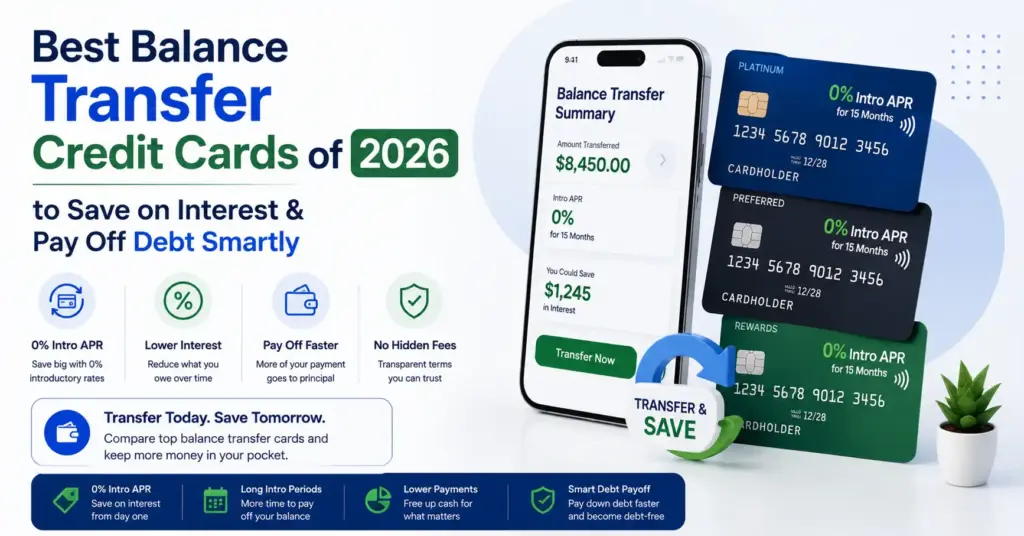
Managing high-interest credit card debt can be expensive, especially when interest charges continue increasing your balance. In 2026, one of the smartest personal finance strategies is using a balance transfer credit card with a 0% introductory APR offer to reduce interest costs and accelerate debt repayment.
A balance transfer allows you to move existing credit card debt to a new card with a lower interest rate, giving you more time to focus on paying down the principal amount instead of expensive finance charges.
For consumers looking for debt consolidation, credit card debt relief, and smarter money management, balance transfer cards can be a powerful financial tool.
What Is a Balance Transfer Credit Card?
A balance transfer credit card allows you to move existing debt from one credit card to another, usually with a promotional 0% APR period or a reduced interest rate.
Instead of paying high monthly interest, your payments during the promotional period can go directly toward reducing your outstanding balance.
Key Benefits:
Lower Interest Costs
A 0% APR balance transfer offer can significantly reduce the amount paid in interest compared to traditional credit cards.
Debt Consolidation
Combine multiple credit card balances into one account with a single monthly payment.
Faster Debt Payoff
More of your payment goes toward the principal balance, helping you become debt-free faster.
Credit Score Optimization
Reducing your credit utilization ratio may support better credit health when managed responsibly.
Things to Consider Before Applying
Balance transfer cards can save money, but they also come with important conditions.
Balance Transfer Fees
Most cards charge a transfer fee, commonly around 3%–5% of the transferred amount.
Promotional APR Expiration
When the introductory period ends, the standard interest rate may apply.
Payment Requirements
Missing payments can cause you to lose promotional benefits and increase borrowing costs.
Credit Requirements
Many of the best balance transfer offers require good to excellent credit.
How to Choose the Best Balance Transfer Credit Card in 2026
Before applying, compare these important factors:
✅ Length of 0% APR introductory period
✅ Balance transfer fee percentage
✅ Regular APR after promotion ends
✅ Available credit limit
✅ Annual fees and hidden charges
✅ Customer support and banking reputation
✅ Eligibility requirements
A longer promotional period and lower fees usually provide the biggest interest savings.
Top Balance Transfer Credit Cards of 2026
1. Reflect 0% Balance Transfer Card — Best for Long Intro APR
The Reflect balance transfer option is designed for borrowers who need extra time to eliminate large credit card balances.
Features:
- Long 0% introductory APR period
- No annual fee
- Suitable for large debt repayment plans
- Helps reduce interest expenses
Best for: People focused on aggressive debt payoff.
2. Citi Simplicity® / Citi Diamond Preferred® — Best for Flexible Repayment
Citi offers balance transfer options designed for consumers seeking simple terms and flexible repayment.
Features:
- Competitive promotional APR
- No penalty APR features on select cards
- Straightforward account management
- Reliable banking services
Best for: Borrowers who want predictable repayment options.
3. Discover it® Balance Transfer — Best for Rewards + Debt Management
Discover Financial Services provides balance transfer options combined with cashback benefits.
Features:
- Promotional APR offers
- Cashback rewards
- No annual fee options
- Digital account management
Best for: Users who want rewards while paying down debt.
4. Chase Slate Edge℠ — Best for Credit Building Features
JPMorgan Chase provides credit card products with balance transfer options and financial management tools.
Features:
- Introductory APR offers
- Credit monitoring tools
- Mobile banking access
- Trusted financial services
Best for: Consumers improving credit habits while reducing debt.
5. BankAmericard® — Best Balanced Balance Transfer Option
Bank of America offers competitive balance transfer solutions for borrowers seeking lower interest costs.
Features:
- Intro APR promotions
- Online account management
- Debt repayment flexibility
- Established banking support
Best for: Mid-sized credit card balances.
Example: How Much Can a Balance Transfer Save?
Imagine you have a $5,000 credit card balance with a 24% APR.
Without a balance transfer, interest charges can add thousands of dollars over time.
With a 0% APR balance transfer card and a 3% transfer fee:
- Transfer fee: around $150
- Lower interest expense
- Faster principal reduction
- Potential savings compared with keeping the original debt
The actual savings depend on your repayment amount, APR, fees, and promotional period.
Common Balance Transfer Mistakes to Avoid
1. Not Paying Off Debt Before the Promo Ends
If your balance remains after the introductory APR period, high interest charges may return.
2. Ignoring Transfer Fees
Always calculate the total cost before transferring debt.
3. Continuing to Spend on Old Cards
A balance transfer works best when you avoid adding new debt.
4. Applying Without Checking Credit Eligibility
Multiple credit applications can affect your credit profile, so compare options carefully.
5. Making Only Minimum Payments
Minimum payments may extend repayment and increase total costs.
Tips to Maximize Your Balance Transfer Benefits
✔ Create a fixed monthly repayment plan
✔ Set up automatic payments
✔ Avoid unnecessary new purchases
✔ Track your credit utilization
✔ Compare multiple card offers
✔ Calculate total interest savings
Is a Balance Transfer Card Right for You?
A balance transfer credit card may be a good choice if you:
- Have high-interest credit card debt
- Have a good credit score
- Can repay debt during the promotional period
- Want to avoid expensive interest charges
- Need a structured debt repayment strategy
It may not be ideal if you regularly overspend or cannot commit to repayment discipline.
Final Thoughts: Use Balance Transfer Cards as a Smart Financial Tool in 2026
Balance transfer credit cards can help reduce interest costs, simplify payments, and support long-term financial planning.
The best option depends on your credit profile, debt amount, repayment ability, and financial goals.
Before applying, compare APR offers, transfer fees, repayment terms, and eligibility requirements. Used responsibly, a balance transfer card can become an effective tool for debt reduction and achieving financial freedom.