
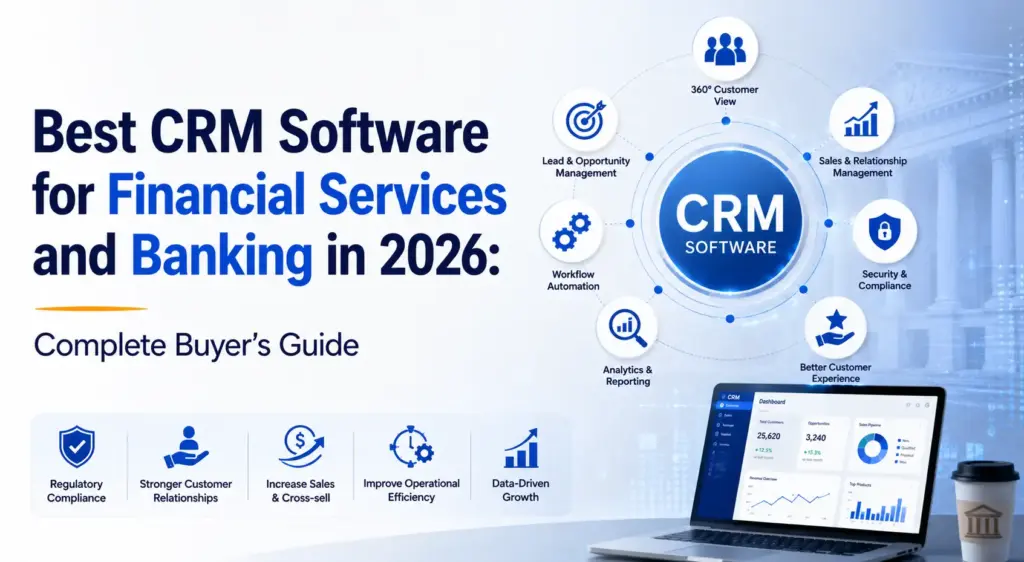
The financial services industry is undergoing rapid digital transformation. Banks, wealth management firms, insurance companies, credit unions, fintech startups, and investment advisors are increasingly adopting advanced Customer Relationship Management (CRM) software to improve customer engagement, streamline operations, ensure regulatory compliance, and drive revenue growth.
Modern financial services CRM platforms go far beyond contact management. Today’s solutions combine AI-powered customer analytics, banking automation, wealth management tools, compliance monitoring, loan origination workflows, cybersecurity protection, and business intelligence reporting into a single ecosystem.
If you’re searching for the best CRM software for banking and financial services in 2026, this guide will help you compare leading platforms and choose the right solution for your organization.
Why Financial Institutions Need CRM Software
Customer expectations have changed dramatically. Clients now demand personalized experiences, instant support, digital onboarding, and secure communication channels.
A modern banking CRM solution helps organizations:
- Improve customer retention
- Increase cross-selling opportunities
- Automate client onboarding
- Streamline loan management
- Enhance wealth advisory services
- Improve compliance monitoring
- Strengthen customer data security
- Generate actionable business insights
Financial organizations using advanced CRM platforms often experience higher customer satisfaction, increased operational efficiency, and stronger revenue growth.
Essential CRM Features for Financial Services
When evaluating CRM software, financial institutions should prioritize the following capabilities:
Customer 360-Degree View
A unified customer profile allows relationship managers to access:
- Banking products
- Investment portfolios
- Insurance policies
- Customer interactions
- Financial goals
- Support history
This holistic view enables highly personalized financial advice and service delivery.
AI-Powered Customer Analytics
Modern CRM systems leverage artificial intelligence to:
- Predict customer behavior
- Identify cross-sell opportunities
- Detect churn risks
- Improve lead scoring
- Enhance portfolio recommendations
AI-powered insights are becoming a major competitive advantage in the banking sector.
Compliance and Risk Management
Financial institutions must comply with regulations such as:
- KYC (Know Your Customer)
- AML (Anti-Money Laundering)
- GDPR
- PCI DSS
- FINRA requirements
- SEC regulations
Advanced CRM platforms automate compliance workflows and reduce regulatory risks.
Workflow Automation
Automation helps reduce manual work by handling:
- Loan approvals
- Customer onboarding
- Follow-up reminders
- Document collection
- Compliance verification
- Customer service requests
This improves efficiency while reducing operational costs.
Cybersecurity and Data Protection
Financial data is one of the most valuable targets for cybercriminals.
Leading CRM platforms provide:
- Multi-factor authentication
- Data encryption
- Access controls
- Audit logs
- Security monitoring
Strong cybersecurity capabilities are now essential for financial institutions.
Best CRM Software for Financial Services and Banking
1. Salesforce Financial Services Cloud
Salesforce remains one of the most widely adopted CRM solutions in the financial sector.
Key Features
- AI-powered customer insights
- Wealth management tools
- Relationship management
- Compliance automation
- Advanced reporting
- Customer lifecycle management
Best For
- Large banks
- Investment firms
- Insurance enterprises
- Wealth management organizations
Industry analysts consistently rank Salesforce among the top CRM solutions for financial institutions.
2. Microsoft Dynamics 365
Microsoft Dynamics 365 offers deep integration with business applications and cloud infrastructure.
Key Features
- AI-powered insights
- Power BI integration
- Banking workflow automation
- Customer intelligence
- Enterprise security
Best For
- Enterprise banking
- Credit unions
- Financial service providers
- Organizations using Microsoft technologies
Its integration with the Microsoft ecosystem makes it a popular choice among financial institutions.
3. HubSpot CRM
HubSpot is an excellent option for smaller financial organizations and fintech startups.
Key Features
- Marketing automation
- Lead management
- Email workflows
- Sales pipeline management
- Customer engagement tools
Best For
- Fintech startups
- Mortgage brokers
- Financial advisors
- Small financial firms
4. Oracle
Oracle delivers enterprise-grade CRM functionality with advanced analytics and risk management.
Key Features
- Fraud detection
- Risk assessment
- Financial forecasting
- Compliance management
- Enterprise reporting
Best For
- Large banking institutions
- Investment firms
- Global financial enterprises
5. Zoho CRM
Zoho CRM offers affordability combined with powerful automation capabilities.
Key Features
- Workflow automation
- Customer segmentation
- AI-powered insights
- Document management
- Mobile CRM
Best For
- Regional banks
- Insurance agencies
- Financial consultants
- Small-to-medium financial firms
Cloud CRM vs On-Premise CRM for Banking
Cloud CRM
Advantages
- Lower upfront costs
- Automatic software updates
- Faster deployment
- Better scalability
- Remote accessibility
Cloud-based financial CRM solutions are increasingly preferred by banks pursuing digital transformation initiatives.
On-Premise CRM
Advantages
- Greater infrastructure control
- Enhanced customization
- Internal data hosting
- Specific regulatory compliance requirements
The right deployment model depends on your organization’s security policies and operational needs.
How to Choose the Right Financial CRM
Before investing in a CRM platform, evaluate:
Business Requirements
- Customer volume
- Branch locations
- Product offerings
- Compliance obligations
Integration Capabilities
Ensure compatibility with:
- Core banking systems
- Loan management software
- Accounting platforms
- Wealth management systems
- Marketing automation tools
Scalability
Choose a CRM that can support future growth, new products, and increasing customer demands.
Vendor Support
Evaluate:
- Training programs
- Technical support
- Implementation services
- Industry expertise
CRM Trends Shaping Financial Services in 2026
Several technologies are transforming CRM adoption across the banking sector:
Artificial Intelligence (AI)
AI helps financial institutions improve personalization, forecasting, and customer engagement.
Predictive Analytics
Advanced analytics allow organizations to identify risks and opportunities before they occur.
Banking Automation
Automation reduces costs while improving customer experiences.
Customer Data Platforms (CDP)
Unified customer data creates more personalized financial services.
Digital Onboarding
Banks are investing heavily in frictionless onboarding experiences to improve customer acquisition.
Final Verdict
The best CRM software for financial services depends on your organization’s size, budget, regulatory requirements, and growth strategy.
For enterprise banking, Salesforce and Microsoft Dynamics remain industry leaders. For fintech startups and smaller firms, HubSpot and Zoho provide excellent value. Organizations requiring extensive customization and advanced analytics may prefer Oracle or other enterprise-focused solutions.
Investing in the right CRM platform can improve customer retention, streamline operations, strengthen compliance, and accelerate digital transformation across your financial organization.