
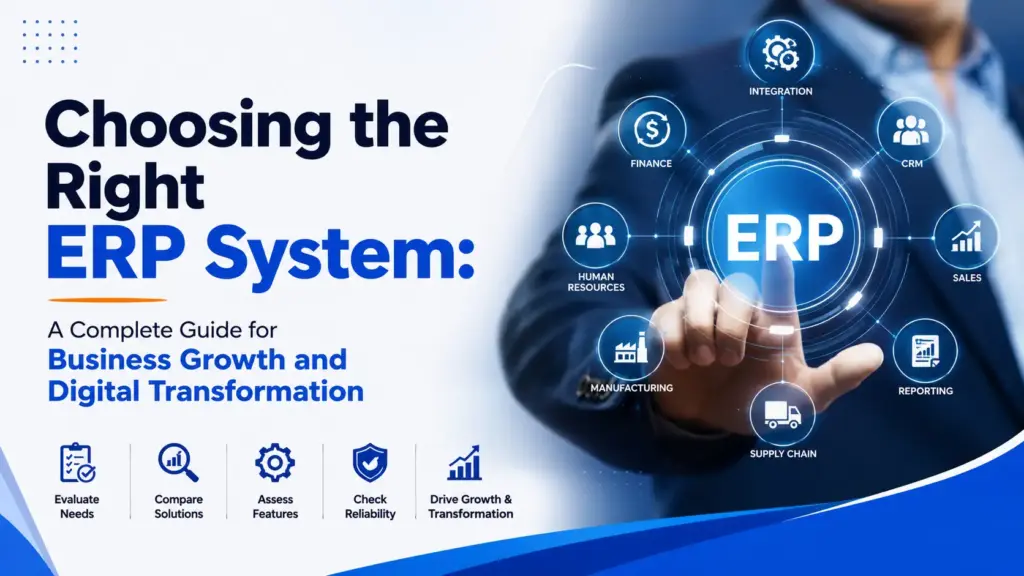
Selecting the right Enterprise Resource Planning (ERP) system is one of the most important technology investments your organization will make. A well-chosen ERP software solution can streamline operations, improve productivity, enhance financial visibility, and support long-term business growth. Conversely, choosing the wrong system can lead to implementation delays, budget overruns, low user adoption, and operational disruptions.
As businesses increasingly embrace digital transformation, the demand for modern cloud ERP solutions and integrated enterprise software systems continues to grow. This guide will help you evaluate ERP options strategically and make an informed decision that aligns with your organization’s goals.
Why Choosing the Right ERP System Matters
An ERP system serves as the central hub for managing critical business functions, including:
- Financial Management
- Human Resources (HR)
- Customer Relationship Management (CRM)
- Inventory Control
- Supply Chain Management
- Procurement
- Manufacturing Operations
- Business Intelligence & Reporting
The right enterprise resource planning software provides real-time visibility into business performance while improving efficiency through business process automation.
Understanding Your Business Requirements
Before evaluating vendors, it’s essential to understand your organization’s current challenges and future objectives.
1. Map Existing Business Processes
Document workflows across all departments to identify inefficiencies and opportunities for improvement.
Areas to analyze include:
- Accounting and finance
- Inventory management
- Sales operations
- Human resources
- Procurement processes
- Customer service workflows
Process mapping helps ensure that your ERP selection supports both current operations and future growth.
2. Identify Operational Pain Points
Ask stakeholders:
- Which processes are too manual?
- Where do errors frequently occur?
- What reporting limitations exist?
- Which systems fail to communicate effectively?
Understanding these challenges helps prioritize ERP functionality requirements.
3. Plan for Future Growth
Your ERP investment should support your organization for many years.
Consider:
- Business expansion plans
- Increased transaction volumes
- Additional users and departments
- Multi-location operations
- International growth opportunities
A scalable cloud-based ERP platform can accommodate growth without requiring major infrastructure investments.
4. Define Integration Requirements
Modern businesses rely on multiple software applications.
Your ERP may need to integrate with:
- CRM systems
- E-commerce platforms
- Payroll software
- Business intelligence tools
- Banking systems
- Third-party logistics providers
Strong enterprise software integration capabilities reduce data silos and improve operational efficiency.
Key ERP Evaluation Criteria
1. Functionality and Business Features
The ERP system should support all critical business functions.
Look for capabilities such as:
- Financial Management Software
- Supply Chain Management Software
- Inventory Tracking
- Procurement Management
- CRM Integration
- Human Capital Management (HCM)
- Advanced Reporting and Analytics
Industry-specific functionality is particularly important for manufacturing, healthcare, retail, logistics, and professional services organizations.
Questions to Ask Vendors
- Does the system support industry-specific workflows?
- What modules are included?
- How frequently are new features released?
- Can functionality be expanded later?
2. Scalability and Flexibility
Business requirements evolve over time.
Choose an ERP solution that can:
- Support additional users
- Handle increasing transaction volumes
- Expand across multiple locations
- Add new modules and capabilities
- Adapt to changing business processes
Modern SaaS ERP platforms typically offer greater scalability than traditional legacy systems.
3. User Experience and Adoption
Even the most powerful ERP system will fail if employees find it difficult to use.
Look for:
- Intuitive dashboards
- Mobile accessibility
- Self-service capabilities
- Easy navigation
- Customizable workflows
Request live demonstrations and involve employees from multiple departments during the evaluation process.
Pro Tip
Organizations that actively involve end-users during ERP selection often experience higher adoption rates and smoother implementations.
4. Total Cost of Ownership (TCO)
Many organizations focus only on software licensing costs and overlook the broader financial picture.
A complete ERP cost analysis should include:
Initial Costs
- Software licensing
- Implementation services
- ERP consulting services
- Data migration services
- Customization requirements
Ongoing Costs
- Technical support
- User training
- Maintenance fees
- Cloud hosting subscriptions
- Future upgrades
Evaluating the full Total Cost of Ownership (TCO) helps avoid unexpected expenses and improves ROI forecasting.
5. Vendor Reputation and Support Quality
The ERP vendor becomes a long-term technology partner.
Research:
- Financial stability
- Industry experience
- Customer satisfaction ratings
- Support availability
- Product innovation roadmap
Request references from companies similar to your organization and discuss their implementation experiences.
Strong vendor support can significantly reduce project risks and improve long-term success.
Cloud ERP vs On-Premise ERP
One of the most important decisions is choosing the right deployment model.
Cloud ERP Solutions
Benefits
- Lower upfront investment
- Faster deployment
- Automatic software updates
- Enhanced scalability
- Remote accessibility
- Reduced IT infrastructure costs
Cloud ERP systems are increasingly popular among organizations pursuing digital transformation initiatives.
On-Premise ERP Systems
Benefits
- Greater control over infrastructure
- Extensive customization options
- Internal data hosting
- Potentially lower long-term subscription costs
Organizations with strict regulatory requirements may prefer on-premise solutions.
The ERP Selection Process
A structured evaluation process improves decision-making and minimizes risk.
Step 1: Build a Cross-Functional Selection Team
Include representatives from:
- Finance
- Operations
- Human Resources
- IT
- Sales
- Executive Leadership
Step 2: Create a Detailed Requirements Document
Clearly define:
- Business objectives
- Technical requirements
- Integration needs
- Security expectations
- Reporting requirements
Step 3: Shortlist ERP Vendors
Research and compare 3–5 potential vendors.
Evaluate:
- Functionality
- Pricing
- Industry expertise
- Support quality
Step 4: Request Demonstrations
Ask vendors to demonstrate real-world business scenarios relevant to your organization.
Step 5: Conduct Reference Checks
Speak directly with existing customers to learn:
- Implementation challenges
- Vendor responsiveness
- System reliability
- User satisfaction
Step 6: Run a Proof of Concept (PoC)
A Proof of Concept helps validate functionality, usability, and integration capabilities before making a final commitment.
Step 7: Negotiate Contracts
Review:
- Service level agreements (SLAs)
- Support commitments
- Upgrade policies
- Security responsibilities
- Pricing structures
Common ERP Selection Mistakes to Avoid
Choosing Based Solely on Price
The cheapest solution often becomes the most expensive over time due to limitations and hidden costs.
Ignoring Change Management
Successful ERP adoption requires employee engagement and training.
Overlooking Integration Requirements
Poor integration can create costly operational inefficiencies.
Underestimating Implementation Complexity
ERP deployments often require significant planning, testing, and organizational change.
Neglecting Data Migration Planning
Accurate data is critical for system performance and reporting reliability.
Failing to Assess Cybersecurity Requirements
Modern ERP systems must support strong cybersecurity compliance, access controls, and data protection standards.
Key Takeaway
The best ERP system is not necessarily the most expensive or feature-rich solution. The ideal choice is the one that aligns with your organization’s business processes, growth strategy, budget, compliance requirements, and long-term digital transformation goals.
By focusing on functionality, scalability, user experience, integration capabilities, and vendor support, businesses can maximize the value of their ERP investment.
Conclusion
Choosing the right ERP system is a strategic decision that affects every aspect of your organization. Whether you’re evaluating cloud ERP software, financial management systems, supply chain management software, or comprehensive enterprise software solutions, a structured selection process is essential.
Invest time in understanding your requirements, involving key stakeholders, comparing vendors, and validating solutions before making a final decision. A carefully selected ERP platform can improve efficiency, enhance business intelligence, reduce operational costs, and create a strong foundation for sustainable growth in today’s competitive digital economy.